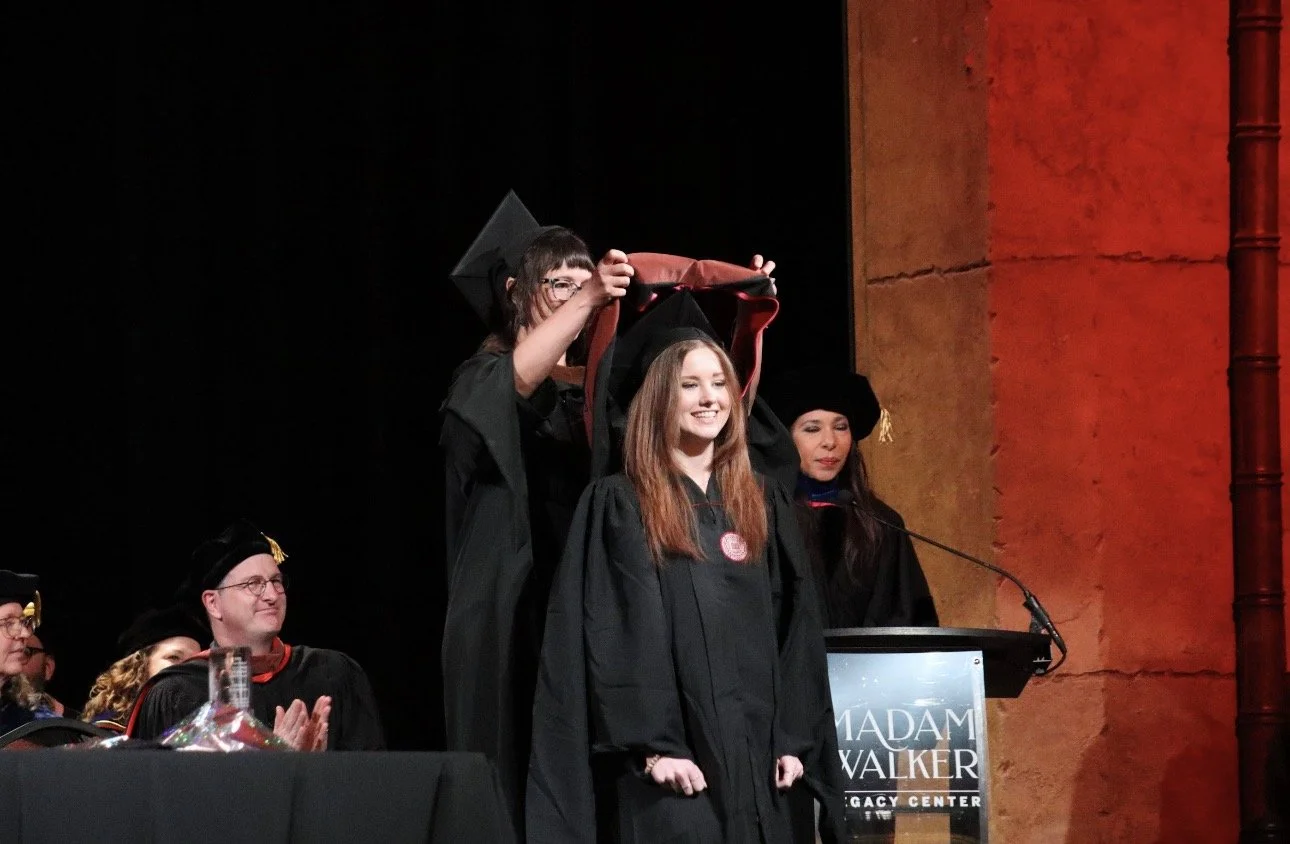
Graduate School
When I applied for grad school, my primary goals were just to learn. Obviously, right? I wanted to explore new materials and understand how to develop concepts. I wanted to push my research to new lengths. Honestly I wasn’t even entirely sure of exactly what I wanted to learn, just that I wanted to do it. I look back on my undergrad and early grad school semesters with great embarrassment. But their maker was not ashamed. She was frustrated, hurt, lost… but bold, loud, brave. Experimenting. As I neared my thesis semester, I found myself hesitant and insecure in a lot of my choices. I thought I was getting more comfortable talking about my ideas and work, but I was really searching for validation. I was far less angry and much more passive. I thought I was growing into my mature rationalism as a woman in her early 20s. I have a distinct memory of sitting in a sociology classroom as a 16 year old girl with the premise of teenage angst being discussed. I remember being told that we will not feel this way forever, that nothing is as serious as it may feel at this time. I remember thinking to myself, I hope I never lose this seriousness. I do not want to ever not care the way I do now. In hindsight, it was most likely meant to be a motivational speech on how life isn’t that serious, the current drama will not matter to us when we leave this place, etc. But I also remember vowing to myself to never become passive in my adulthood. I did, become passive in my adulthood.
In my opinion, college doesn’t teach you anything. People teach you, but college does not. And yes, obviously it is the people working at the college that teach you. And yes, I pursued a master’s degree, so I clearly highly value university. Looking back on all of my education, I have few strong classroom memories. The ones that stand out involve open class discussion, socratic seminar style. The rest are in moments on campus, but not in a classroom, I say as a person who loves a classroom. School, to me, is associated with opportunity. Opportunity to learn, discuss, test, and pursue. A classroom is simply the meeting place of others with the same desires you have. I have always thrived on academic validation, I think because if there is a grade and a degree at the end of this thing I am pursuing, it validates its worth to the world. Looking back on my master’s degree, I like to believe I would do it again even without a stage to cross, hand to shake, or diploma on the wall.
This degree was transformative for me. I found myself passive, and then I found myself 16 again. Going into this program as a sure of herself 23 year old moving to a new state and city I had never seen before, I was unafraid because it was in pursuit of academia, which has always been my crutch. I was confident that I had it in me to do this right. Grad school broke that confidence down quickly, in the way a broken bone heals stronger than it was previously. Grad school made me 16 again. I leaned on her know it all attitude and refusal to be proved wrong, but taught her how to accept appropriate feedback at the same time. We joined forces, and I needed her passion as much as she needed my rationalism. As someone always looking forward, the grad school pursuit reminded me to look back over my shoulder.
I did not learn how to be an artist in the classroom; I learned it in the shop, the studio, the bench outside the parking lot, the walk between the building and the parking garage, the dining hall down the street, at the vending machine, in the hallways, in the Home Depot checkout line, while loading a trailer, and in the car. I learned it in the questions themselves, not the answers, and not the feedback. I learned it in pursuit of it. The classroom will not teach you how to be an artist, but the opportunity it creates will, as long as you chase it down, wrangle it, and claim the knowledge to be yours. College is the setting. Everything else is entirely up to you.
My thesis became the place where those lessons exposed themselves. It was no longer about proving my fabrication skills, citing the right theorists, or having a successful critique… depending on how you measure success. It became an attempt to make work that I believed in before anyone else did. Before I did. A work I could not justify for months, I had to abandon my idea that critique was permission. I had to abandon my ideology of academic validation and at times make work that directly defied feedback. This program had to be about me, my work, and nothing else. No accolades, no A+’s. Nothing about my thesis was formed in a classroom. It was formed over emails, in meetings, and again, on the bench by the parking lot. The classroom did not teach me all I needed to know, but it sparked the curiosity to investigate things further. I found my thesis theory sitting in the same gut I’ve always had. A gut I had neglected in pursuit of fitting into the classroom for a long time. I entered this program believing that growth meant becoming something entirely new. In leaving, I realize it meant both abandonment and a recovering. Nuances are not opposites, but codependents. Despite all the material knowledge I have gained and the gratitude I have for those who taught me this, graduate school did not teach me how to make art. But it taught me how to be an artist.
Graduate school gave me something more valuable than answers or diplomas. It surrounded me with people who cared enough to ask difficult questions, to challenge my assumptions, and stay invested through every step of the process. I want to sit with that for a minute because it truly does take a lot of care to invest in someone else’s growth. College gave me that. It gave me those people, the time, the space, and the opportunity to turn their questions into my own discoveries. College cannot make you an artist, only you can do that. But it can give you an extraordinary community and the resources to pursue the work wholeheartedly. It was the setting, the meeting place, that gave me everything else.
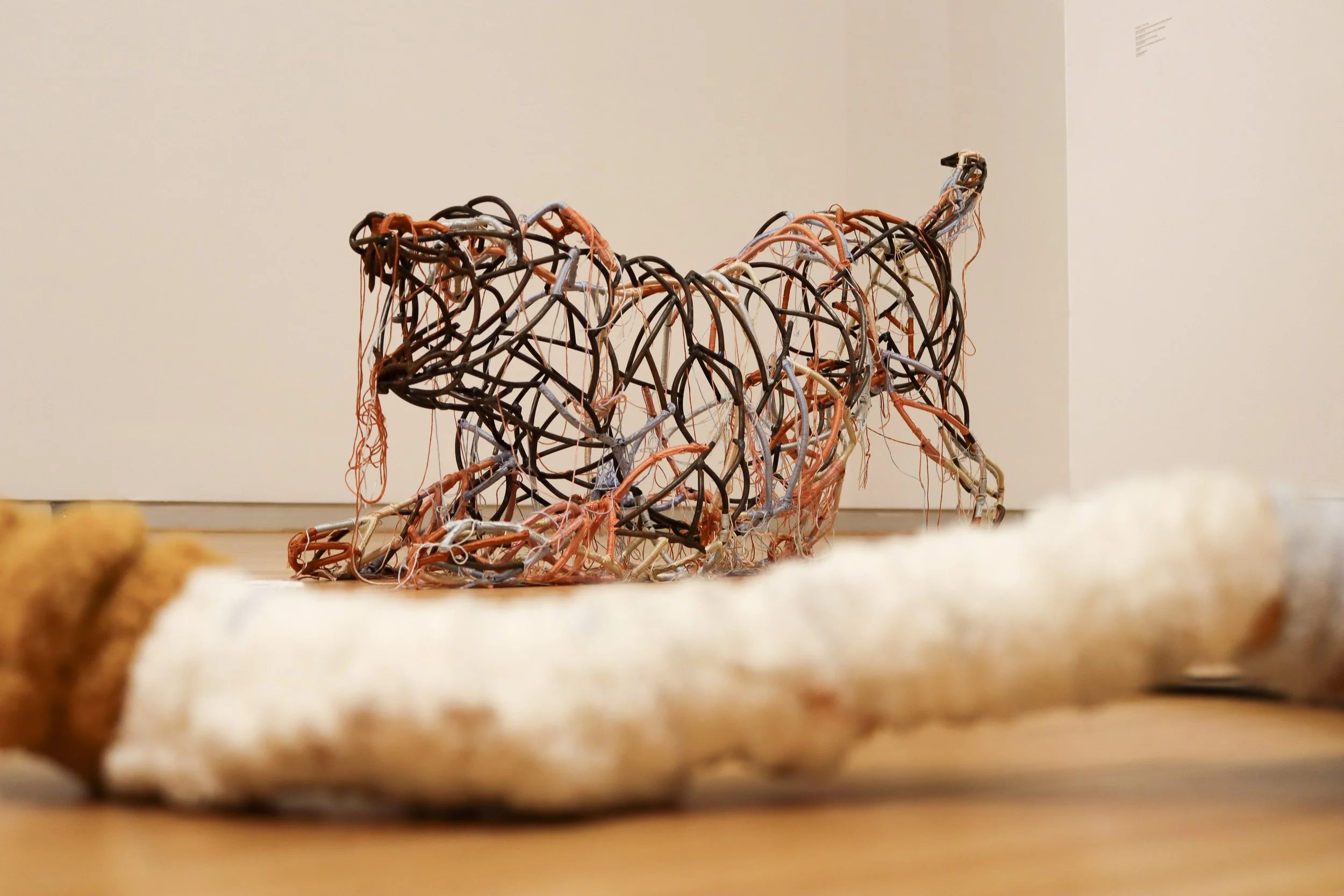
I Was A Good Girl, I Will Be A Good Woman
I Was A Good Girl, I Will Be A Good Woman
2026
Indianapolis
“The dog operates as a metaphor for domestication, loyalty, and control, reflecting the contradictory expectations imposed on girls as they transition to womanhood.”
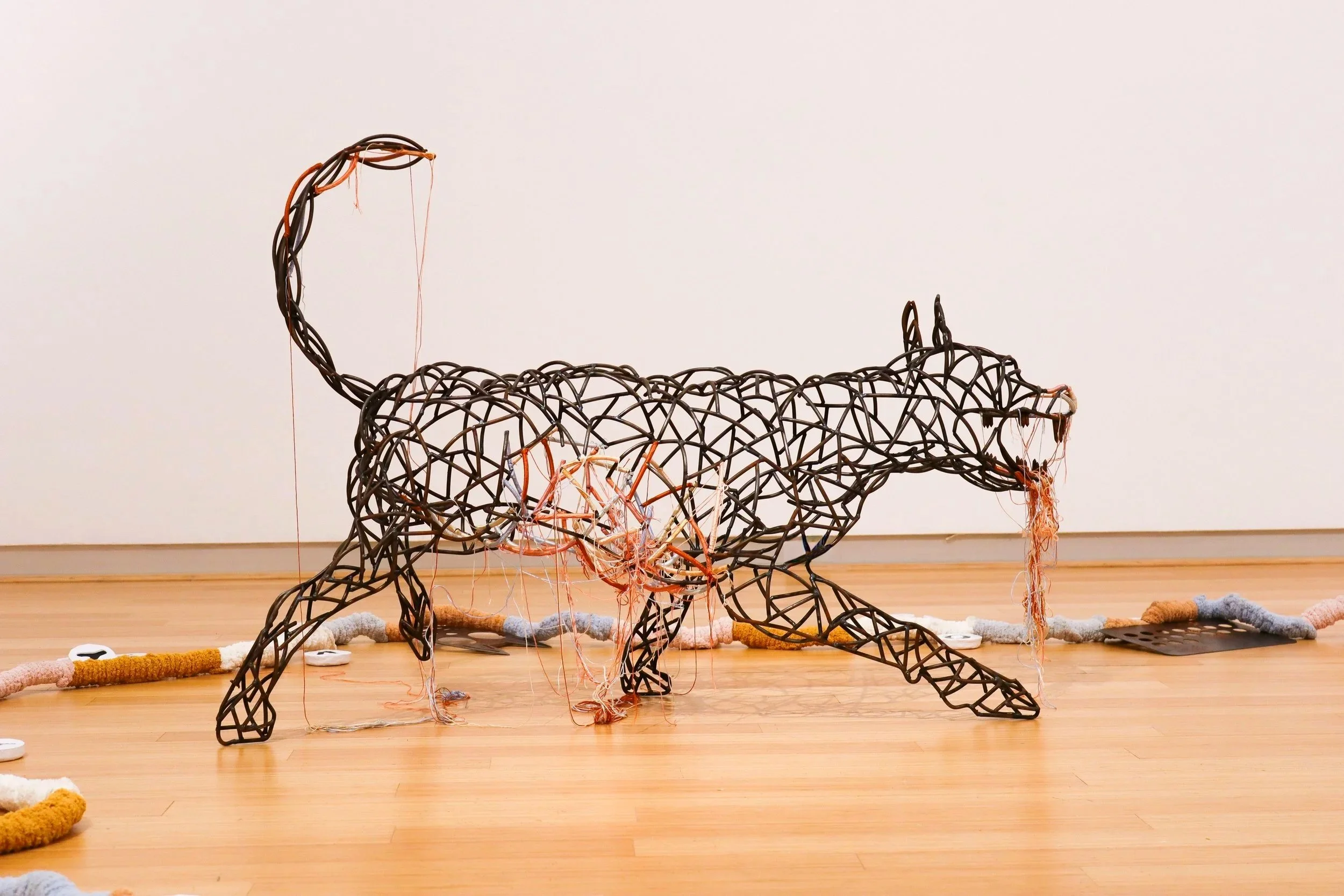
“You remind yourself to tell a 16 year old girl to always question instinct and indoctrination, and that it is okay if she finds contentment in that.”
=
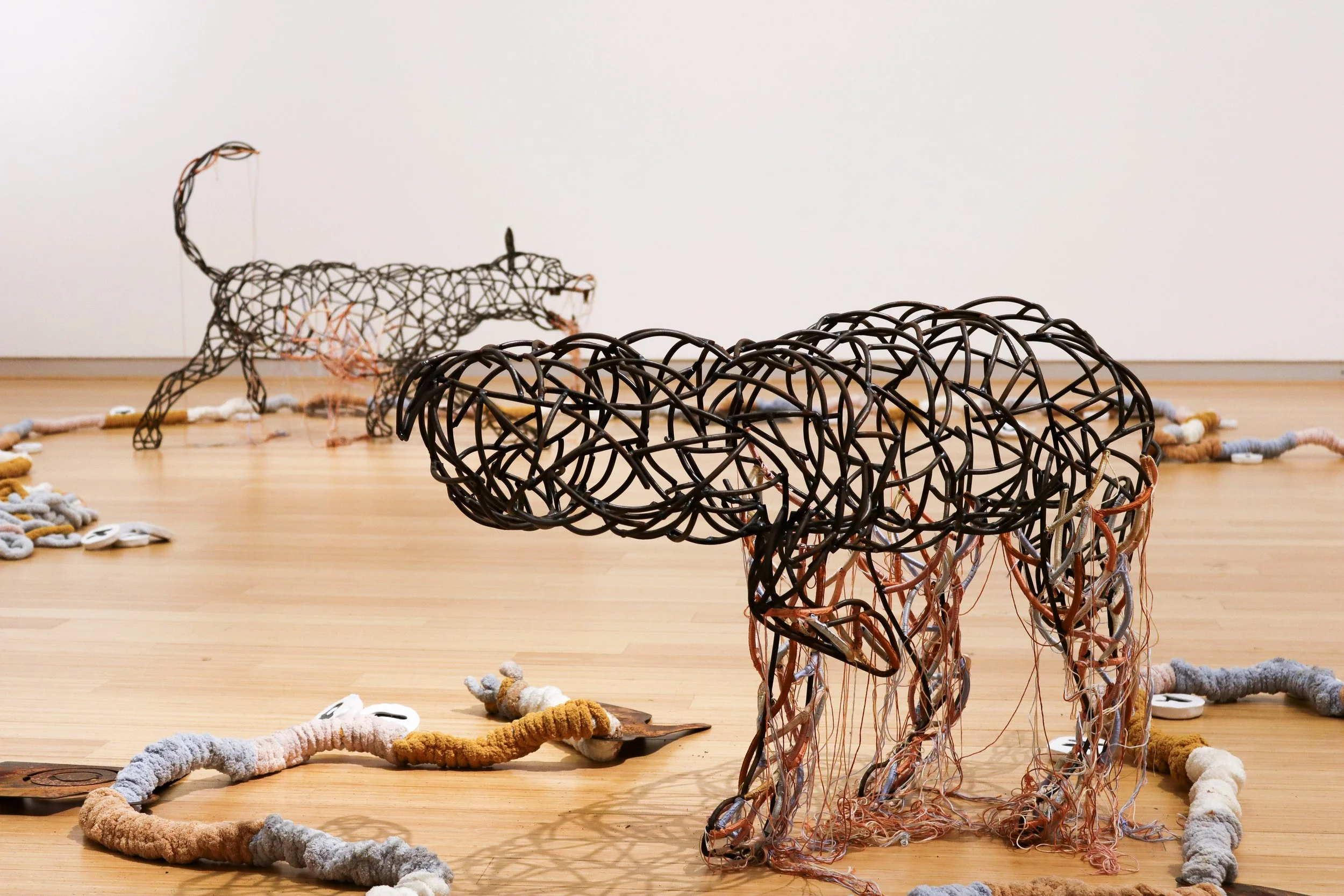
“It is okay to be overconfident only to become the scared dog with your tail between your legs in the corner sometimes.”